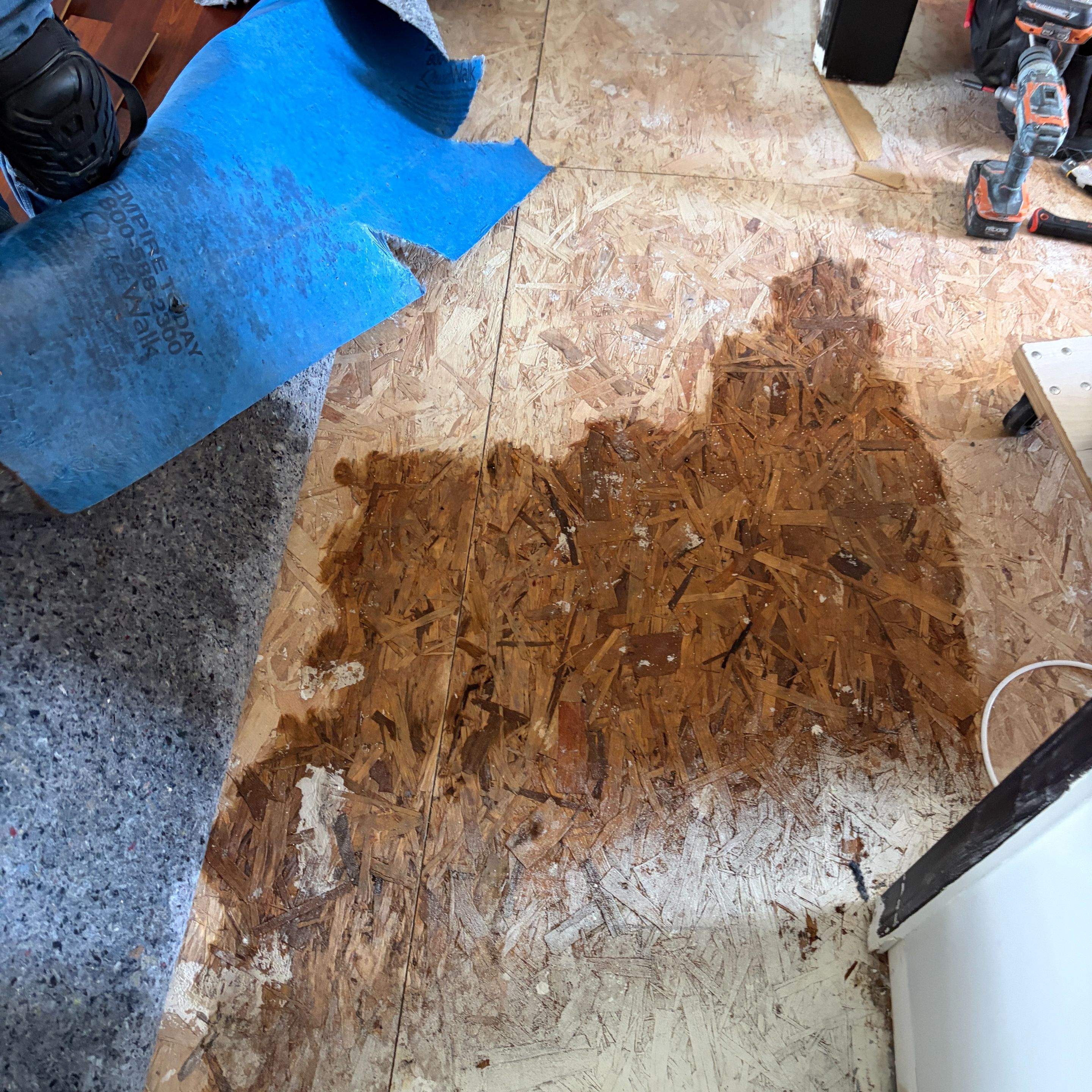
The 10-Step Water Extraction Protocol
Every Summitville Water Restoration extraction job in Summitville follows this exact sequence. Skipping steps is how secondary damage and mold claims happen 30 days later.
- Safety assessment and power isolation (0 to 5 minutes on site). Technicians shut off electricity to affected circuits at the panel, test outlets with a non-contact voltage detector, and confirm no submerged appliances are energized. Gas shutoff if water is near the water heater or furnace.
- Source identification and stoppage (5 to 15 minutes). We trace the water to its origin: supply line, drain line, appliance failure, sump pump failure, roof penetration, or groundwater intrusion. Active sources are capped, clamped, or shut at the main. Without stopping the source, extraction is wasted labor.
- IICRC category classification. Category 1 is clean water from a supply line or rainwater. Category 2 (gray) includes washing machine overflow, dishwasher discharge, or aquarium water. Category 3 (black) covers sewage, river flooding, and any water sitting longer than 48 hours. Classification determines PPE, disposal method, and whether porous materials can be saved.
- Moisture mapping with calibrated meters. We document baseline readings using Tramex non-penetrating meters (0 to 100 scale) and Delmhorst pin meters (6 to 40 percent moisture content). Affected zones are marked with painter's tape and photographed. This map drives the extraction plan and the insurance scope.
- Content manipulation. Furniture is blocked up on Styrofoam or moved out. Rugs are pulled. Boxes and contents on the floor are inventoried and relocated to a dry staging area, typically the garage or an upper level.
- Bulk water extraction. Truck-mounted units pull 100+ gallons per hour through 1.5 to 2 inch hose runs. For tight basements and stairwells in older Summitville homes, we deploy portable extractors rated at 145 to 200 inches of water lift. Carpeted areas receive weighted extraction wands that pull water through pad without removing carpet when salvage is realistic.
- Flood cut and material removal if required. For Category 2 and 3 losses, drywall is cut 12 to 24 inches above the visible waterline, insulation is bagged and removed, and saturated baseboards come out. Category 1 with rapid response often allows in-place drying without demolition. Specifics on the demolition versus dry-in-place decision live in our flooded basement cleanup guide.
- Antimicrobial application. EPA-registered hospital-grade antimicrobial is applied to all affected substrates at label-rate dilution. Required for Category 2 and 3, recommended for Category 1 on porous materials. Application is done with pump sprayers or ULV foggers depending on access, with a 10-minute dwell time before any further work resumes.
- Structural drying setup. We calculate the load using cubic footage, class of water loss, and material permeability. A typical 400 square foot basement requires 3 to 5 air movers at 2,800 to 3,200 CFM each and one LGR dehumidifier rated at 130 to 180 pints per day. Equipment runs 3 to 5 days with daily moisture monitoring.
- Final moisture verification and documentation. Materials must return to within 2 to 4 points of unaffected reference readings before equipment is pulled. All readings, photos, equipment logs, and the moisture map are compiled into a report your adjuster can use directly.
Equipment Specifications We Bring to Every Summitville Job
- Truck-mount extraction unit: 200+ PSI, 200 CFM vacuum, heated solution capability
- Portable extractors: 5 to 13 gallon capacity, 145 to 200 inch water lift
- Air movers: low-profile centrifugal, 2,800 to 3,200 CFM, stackable
- LGR dehumidifiers: 130 to 180 PPD at AHAM, drain hose or pump-out
- Moisture meters: pin and pinless, calibrated quarterly
- Thermal imaging camera for hidden moisture behind walls and under flooring
- HEPA air scrubbers for Category 3 losses and confined spaces
- Submersible trash pumps rated at 1,500 to 3,000 GPH for losses exceeding 2 inches of standing water
- Negative air machines with 12-inch ducting for containment of contaminated zones
- Wet/dry HEPA vacuums for fine debris and sediment after bulk extraction
Why Equipment Sizing Matters
Undersized dehumidification is the single most common reason a drying project stalls. A 70-pint consumer unit cannot pull the grain depression needed in a 400 square foot basement, regardless of how many days it runs. LGR (low grain refrigerant) units operate effectively down to 40 grains per pound of dry air, while standard refrigerant units stall around 55 to 60 grains. We size every job using psychrometric calculations rather than guesswork, and we log temperature, relative humidity, and grains per pound at the affected area, the unaffected reference area, and outside ambient.
What You Should Do Before We Arrive
- Shut off the water main if the source is a supply line
- Cut power to affected rooms at the breaker if safe to reach
- Move pets and children to a dry area
- Lift small valuables and electronics off the floor
- Photograph everything for your claim
- Do not enter standing water deeper than ankle height in a basement with electrical outlets
- Call your insurance carrier to open a claim number
- Locate any prior repair invoices, appliance warranties, or plumber receipts that may support your claim
- Note the time the loss was discovered (adjusters ask this on every claim)
If you suspect contaminated water from a backup, do not attempt DIY extraction. Review the safety protocols in our sewage backup cleanup walkthrough and call us directly.
Response Time Targets and Pricing Ranges
- Initial phone triage: under 5 minutes from first ring
- Truck dispatch to Summitville addresses: 60 to 90 minutes standard, faster in core service areas
- On-site extraction start: within 15 minutes of arrival
- Bulk water removed: typically 2 to 6 hours depending on volume
- Drying equipment installed and running: same visit
- First monitoring visit: 24 hours after initial setup
- Equipment adjustment or removal decision: based on documented readings, not a fixed timeline
Extraction-only pricing in Summitville typically runs $400 to $1,500 for residential jobs under 500 square feet of affected area. Full extraction plus 3-day structural drying generally falls between $1,800 and $4,500. Category 3 losses with demolition often exceed $5,000. For a full breakdown, see our water damage restoration cost guide.
Cost Variables That Move the Final Invoice
- Square footage of wet materials, not just floor area
- Number of affected rooms and ceiling assemblies
- Water category (Cat 3 roughly doubles labor and disposal costs)
- Accessibility (stairs, crawlspaces, and tight mechanical rooms add hours)
- Hardwood floor involvement (specialty mat drying systems run $200 to $400 per day)
- After-hours, weekend, or holiday dispatch surcharges (typically 15 to 25 percent)
- Content manipulation volume and pack-out requirements
Common Mistakes That Multiply Restoration Costs
- Running household fans on wet carpet without dehumidification, which evaporates moisture into wall cavities and ceilings
- Lifting carpet edges without protecting the pad, then reinstalling over compromised tack strips
- Waiting more than 48 hours to call, pushing a Category 1 loss into Category 2 territory
- Skipping the moisture map, which leaves hidden pockets behind cabinets and under subfloor seams
- Removing equipment early because the surface feels dry, when interior material moisture is still 18 to 25 percent
Summitville Water Restoration dispatches certified technicians across Summitville 24 hours a day. Faster source control and properly sized equipment is the difference between a 4-day dry-out and a 6-week mold remediation project.